Back a Proven Builder's Transition to Software
I've raised $2M+ in crowdfunding and sold 500K+ physical products globally. Now I'm applying that same product instinct to micro-SaaS — and I'm looking for runway to make it happen.
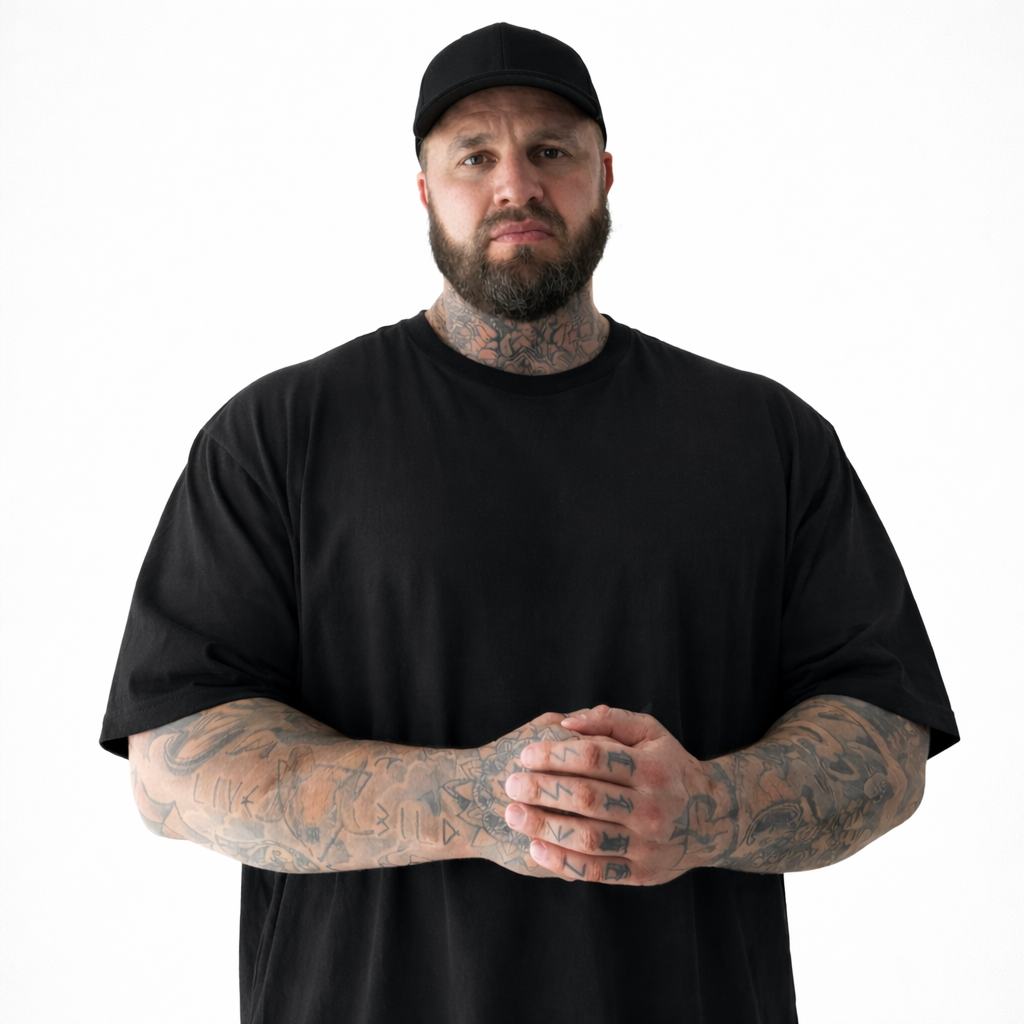
Don Wilder
Founder, Beast Creative · Chiang Mai, Thailand
Product builder with 13+ years of experience—but I'm far more than just an engineer. My background spans product development, graphic design, brand identity, marketing strategy, and storytelling. I've designed everything from product packaging to crowdfunding campaigns, created visual assets for global launches, and built brand narratives that resonate with target markets. This comprehensive skill set—understanding how to build a product, design its identity, and craft its market story—positions me uniquely for micro-SaaS success.
The short version: I connect dots others miss, I design things people want (from the product to the brand to the message), and I ship.
The Credentials
Crowdfunding Raised
Multiple successful Kickstarter campaigns, including products that hit 500-800% of funding goals. Proven ability to identify market demand and deliver.
Products Sold
The Venty Fan alone has sold over half a million units across 50+ countries. Not a side project — a real business generating multi-million dollar annual revenue.
Years Product Experience
From concept to market — physical goods, games, and now software. The principles transfer: identify problems, design with intention, ship fast, iterate.
Design Since High School
Trained in graphic design with a natural eye for aesthetics. This isn't learned — it's embedded. Design thinking informs everything I build.
What I Bring to the Table
Product Development
End-to-end: ideation, validation, design, build, launch
Graphic Design
Packaging, marketing assets, game cards, visual identities
Brand & Identity
Logo design, brand systems, visual storytelling
Marketing & Copywriting
Campaign narratives, product stories, conversion-focused messaging
Crowdfunding Campaigns
$2M+ raised through compelling design and storytelling
User Experience
Designing flows that feel intuitive and solve real problems
Videography & Content
Product videos, campaign content, visual marketing
AI-Assisted Dev
Leveraging Claude, Cursor, and modern tools to ship faster
Where I'll Build
Four categories I know deeply and care about — where I can identify real problems and design real solutions.
Productivity
Tools that remove friction from work
Health & Fitness
Software for physical optimization
Self-Development
Systems for personal growth
Games
Experiences worth the time
Why Micro-SaaS? Why Now?
I've had real success in physical products — products that have sold 500,000+ units, generated millions in revenue, and been featured in major media globally. So why transition?
Because I've learned where I shine — and where physical products hold me back.
My Zone of Genius
Innovation. Connecting dots others miss. Visual identity and design. Taking a concept from zero to market. These are the things that come naturally — the "idea guy" skills that actually create value when paired with execution ability.
Physical Product Pain
12+ month timelines from concept to shelf. Manufacturer management nightmares. Capital-intensive inventory. Logistics complexity. Heavy customer service. Certifications. Partnership dependencies that have burned me multiple times.
SaaS Advantages
Days from concept to launch, not months. Full end-to-end control — no manufacturer dependencies. Minimal capital requirements. No inventory. Global distribution from day one. The ability to iterate in real-time based on user feedback.
The AI Moment
Everything is moving to software. AI tools have collapsed the barrier between "idea person" and "builder." For someone with my product instincts and design eye, this is the perfect moment — the tools finally match my strengths.
This isn't abandoning what I know. It's applying 13+ years of product development discipline to a medium that moves at my speed. The skills transfer — identifying real problems, designing with intention, shipping fast, iterating relentlessly. Only now, I can do it without the bottlenecks.
Beast Creative
"Beast Creative" is a collision of "be creative" and "beast mode"—it represents sustained creative output as a system, not occasional inspiration. Most companies take months to ship. I ship weekly. The name reminds me that process beats product, systems beat output. (It's also tattooed on my arm, if that tells you anything about commitment level.)
Technical Proof & Target Products
Before asking for runway, I've shipped three working demos to prove I can execute on software. These aren't the revenue targets—they're technical validation that I can build and deploy real products. Below those, I've outlined the products I believe have clear paths to monetization.
Working Demos (Shipped)
Minimal Quote
Cross-platform inspirational quotes app with daily notifications and elegant typography. Built with React Native.
Note Peel
Sticky note application for quick thoughts and reminders. Clean interface, instant save, drag-and-drop organization.
Meditation Breathe
Guided breathing exercise app with visual timing cues. Helps build consistent meditation practice.
Live demos available upon request.
These prove I can ship. The apps below are where I'll focus revenue efforts.
Revenue Targets (In Development)
Interactive previews available upon request.
Snap2GPT
Chrome Extension - Universal AI Screenshot Assistant
Market Gap: Users constantly screenshot content (error messages, designs, text) and manually switch to ChatGPT to paste and analyze. This creates 5-7 steps of friction for a workflow that happens dozens of times daily for power users.
Validation:
- Reddit productivity threads show 47+ mentions of this exact pain point
- Existing OCR tools (Text Sniper, Textify) charge $10-30/month but lack AI integration
- Chrome screenshot tools have 500K+ combined users, proving demand for capture workflows
Competitive Advantage:
- Instant capture-to-AI pipeline (2 clicks vs 7 steps)
- Context-aware quick actions (translate, summarize, reply, extract)
- Works with any AI tool (ChatGPT, Claude, Gemini) - not locked to one platform
Revenue Model: Freemium - Free for 10 captures/day, $4.99/mo Pro for unlimited + priority processing
Market Potential: Chrome productivity extensions average 50K-500K users. At 2-5% conversion, targeting $2-5K MRR within 6 months.
Status: UI/UX complete, API integration in progress
Notion Clipper
Chrome Widget - Instant Clipboard to Notion
Market Gap: Notion users copy content (from ChatGPT, articles, emails) and waste 15+ clicks navigating to the right database to paste. This happens 10-30x daily for active users, creating significant workflow friction.
Validation:
- Existing tool "Save to Notion" has 400K+ users at $5.99/mo, proving market demand
- Notion's 30M users globally (4M paid) represent massive addressable market
- Reddit r/Notion has 200+ requests for "faster clipboard workflows"
Competitive Advantage:
- One-click save vs 5-7 steps with existing tools
- Smart destination memory (learns your frequently used databases)
- Works from anywhere (not just web pages - includes AI chat outputs)
Revenue Model: Freemium - 25 saves/month free, then $2.99/mo or $19.99 one-time
Market Potential: "Copy to Notion" has 17K active users charging $9/mo. Conservative 1% capture of Notion's US user base = 10K users = $30K MRR potential.
Status: Core functionality working, polishing UX and adding template system
Notion Time Tracker
Desktop Widget - Visual Time Tracking for Notion Tasks
Market Gap: Notion lacks native time tracking. Users want to track time on tasks without switching to Toggl/Clockify and manually syncing back. Current solutions require 8-10 clicks per time entry or complex Zapier setups.
Validation:
- "Time tracking for Notion" = 12K monthly Google searches
- Toggl + Notion integration has 50K+ users (validating demand for this workflow)
- Freelancers, consultants, agencies using Notion need billable hours tracking
Competitive Advantage:
- Visual drag-and-drop interface (drag task card into timer to start)
- Multiple simultaneous timers (track parallel projects)
- Automatic sync back to Notion database (no manual entry)
- Dashboard analytics (time by project, category, date range)
Revenue Model: Freemium - 20 hours/month free tracking, $5.99/mo Pro for unlimited + reporting
Market Potential: Time-tracking SaaS market is $500M+. Notion-specific tools like "Timely" generate $100K+ MRR. Target: 5K users @ $5.99 = $30K MRR within 12 months.
Status: 30% complete, core timer logic built, Notion API integration next
These three apps represent my "revenue spine" - complementary Notion productivity tools that solve real, validated pain points for the same user base. Each went through a rigorous decision matrix (pain point severity, proven spending behavior, technical feasibility, strategic fit) scoring 7.9-8.1/10 on opportunity assessment.
How I Choose What to Build
Every product must pass three filters:
1. Personal Pain Point
I've experienced this problem myself or seen it repeatedly in communities I'm active in
2. Proven Spending Behavior
Similar products already generate revenue (validates people will pay)
3. Shippable in 2-4 Weeks
Technical scope matches my current capabilities with AI assistance
Validation Process
I validate demand before building through AI-powered market intelligence:
Deep Social Listening
Mining Reddit, Twitter, Product Hunt, and app store reviews to identify repeated pain points, feature requests, and workflow complaints. AI tools let me analyze thousands of user conversations in hours instead of weeks.
Competitive Intelligence
Analyzing existing paid solutions for pricing models, feature gaps, user satisfaction scores, traffic patterns, and growth trajectories. This reveals what users are willing to pay for and where incumbents are falling short.
Macro & Micro Trend Analysis
Identifying market shifts (AI productivity boom, remote work tools), category growth rates, and emerging user behaviors. AI enables pattern recognition across massive datasets that would be impossible to analyze manually.
Direct Market Signals
Google search volume, Chrome Web Store download trends, Product Hunt engagement metrics, and GitHub repository stars. These provide quantifiable demand indicators without needing to build landing pages first.
This isn't guesswork—it's the same market validation approach I used for physical products, now supercharged by AI research capabilities. In 2026, building an MVP is often faster than building a landing page, so I validate through data depth rather than marketing tests.
Competitive Landscape
I'm not competing with Notion, Superhuman, or established SaaS giants. I'm targeting micro-niches they ignore:
Snap2GPT
Competes with: Manual copy/paste (free but friction-heavy)
Advantage: Existing OCR tools are $10-30/mo and clunky. We're faster and cheaper.
Clipboard to Notion
Competes with: Save to Notion ($5/mo, 10K users) and Web Clipper (free but limited)
Advantage: Faster workflow, better UX, more database options
Notion Time Tracker
Competes with: Toggl Track ($9-18/mo), Clockify (free but clunky), Notion + Zapier integrations (complex setup)
Advantage: Only visual drag-and-drop time tracking built specifically for Notion workflows. Competitors require switching apps or complex automation. Our advantage: 2-second start/stop vs 30+ seconds with alternatives.
The strategy isn't "build something completely new"—it's "build something 10x better in one specific dimension that existing solutions miss."
Your Money Back — With Interest
This is a loan, not a gift. Here's how repayment works:
Focus Period
No payments during the initial sprint. All resources go to shipping and validating products.
Repayment Period
$1,850/month fixed payments for 18 months. Total repayment: $33,300 (10% simple interest).
If It Works — You Can Participate
Beyond the base loan terms, I'm offering lenders the option to convert a portion of their loan into product equity:
Convertible Loan Option
At any point during the repayment period, you can convert up to 50% of your outstanding loan balance into a 5% revenue share in any single product. This gives you both downside protection (the loan) and upside potential if something takes off.
A product hits $10K MRR. You convert $10K of remaining loan balance into 5% revenue share. You'd receive $500/month while maintaining the regular loan payments on the remaining balance.
You get loan repayment security plus optional upside exposure. I maintain full control during the critical early phase. If a product succeeds, you benefit beyond the base return. It's a win-win that aligns our incentives.
Skill Development Plan
I'm not trying to become a senior engineer. I'm becoming proficient enough to ship complete, scalable products independently using AI-assisted development.
Current capabilities (Month 0):
- • Frontend development (React, React Native)
- • UI/UX design and prototyping
- • Basic deployment and hosting
- • AI-assisted coding workflows
By Month 6, I'll have mastered:
- • Full-stack application architecture
- • Payment integration (Stripe, in-app purchases)
- • User authentication and authorization systems
- • API design and third-party integrations
- • Analytics implementation and data-driven iteration
- • Chrome extension development and browser APIs
- • Mobile app deployment (iOS, Google Play)
- • Database design and management
- • Growth tactics (SEO, Product Hunt, community)
Months 1-2: Foundation & Integration
Master payment systems (Stripe, RevenueCat), user authentication, database architecture, and production deployment workflows. Ship products with real monetization infrastructure.
Months 3-4: Advanced Features & Scale
API integrations, webhook handling, background jobs, advanced state management, performance optimization. Build products that handle thousands of users reliably.
Months 5-6: Growth & Polish
A/B testing, analytics pipelines, conversion optimization, retention mechanics, referral systems. Products become scalable businesses, not just MVPs.
By Month 6, I won't be a 10x developer—but I'll be a product-minded founder who can ship complete, revenue-generating products independently and know exactly when to hire technical expertise for scale.
The Backer Experience
I want this to be more than a transaction. If you fund this sprint, you get a front-row seat to the entire journey — and some exclusive access that makes it interesting.
Weekly Updates
Detailed progress reports every Friday. See the real numbers, challenges, and wins as they happen.
Early Access
Test new features before they launch. Your feedback shapes the products.
Direct Access
Monthly video calls to discuss progress, strategy, and opportunities.
$30,000 — 6-Month Founder Sprint
A founder's loan to support a focused execution sprint. Low overhead (based in Thailand), proven ability to ship, and a clear repayment structure. See detailed terms below.
Repayment Scenarios
Scenario A: Products Generate Revenue
If any product hits $5K MRR by Month 7, repayment accelerates to 20% of monthly revenue until loan is cleared. You get paid back faster when things work.
Scenario B: Products Don't Generate Revenue
I transition to design consulting immediately in Month 6. Here's the math:
Consulting Income Breakdown
- Consulting Rate: $100/hour (market rate for product design work)
- Billable Hours: 20 hours/week = 80 hours/month
- Gross Income: $8,000/month
- Living Expenses: $4,000/month (same lean budget)
- Taxes/Buffer: ~$1,500/month
- Available for Repayment: $2,500/month
Your loan payment is $1,850/month. Even in the worst-case scenario, consulting income covers repayment with $650/month remaining for continued product development.
Why you should believe I can get consulting work:
I've done professional design work for 13+ years. The same skills that created crowdfunding campaigns generating $2M+ are marketable to startups, e-commerce brands, and agencies. I don't need to "find" clients—I have a network from my physical product days.
Budget Reality Check
The $30K breaks down to exactly $5,000/month over 6 months:
$4,000/mo Living + Tools
- Rent & Utilities: $800
- Food & Living: $1,200
- Development Tools: $500
- Buffer: $1,500
$1,000/mo Marketing
Reserved for proven traction. Only spent on products showing clear product-market fit signals.
This is tight by design. I live below my means in Chiang Mai. No team, no office, no waste. If I need more runway due to unforeseen costs, I can take 1-2 consulting contracts without derailing the sprint. The constraint is intentional—it forces focus.
Monthly Living
$4,000/mo × 6 = $24,000
Lean operation based in Chiang Mai, Thailand
Buffer & Marketing
$6,000 total
For products that gain traction — ads, tools, support as needed
10% Annual Interest
$33,300 total repayment
18 months starting Month 7
Optional Upside
Convert up to 50% of principal into equity in any product launched
Premium Access
Lifetime premium accounts for all launched SaaS products — for you and two friends
Base Terms
10% Annual Interest
Principal + interest repaid over 18 months, beginning Month 7. That's $1,850/month for 18 months, totaling $33,300 returned to you.
Early Success Accelerator
$5K MRR Trigger
If any product hits $5K MRR, repayment accelerates to 20% of monthly revenue until fully repaid. You get paid back faster when things work.
My Commitment — Regardless of Outcome
I commit to repaying this loan whether or not the products succeed. If the sprint doesn't produce revenue, I will generate income through design consulting and contract work — skills I've used professionally for 13+ years. My track record of delivering for clients (the same skills that launched $2M+ in crowdfunding campaigns) is marketable and in demand.
Bottom line: You're not betting on whether micro-SaaS works. You're betting on whether I'm good for it. My history says I am.
Convertible Loan Option
At any point before full repayment, you may elect to convert up to 50% of your outstanding principal into equity in any single product launched during the 6-month sprint.
Conversion Rate
$1 = 0.1% equity
Max Conversion
$15K → 1.5% equity
Your Choice
Pick any product
Example: If you lend $30K and a product takes off, you could convert $15K into 1.5% equity of that specific product while receiving repayment on the remaining $15K. You get both security and upside.
This is entirely optional. If you prefer a straightforward loan with guaranteed repayment, that works too. The convertible option is for those who want skin in the game if something hits.
Where the Money Goes
| Category | Monthly | 6-Month Total | Notes |
|---|---|---|---|
| Living Expenses | $2,500 | $15,000 | Rent, food, utilities — Chiang Mai cost of living |
| Tools & Services | $500 | $3,000 | AI tools, hosting, domains, dev tools, subscriptions |
| Dev Support | $500 | $3,000 | Contract help for technical blockers as needed |
| Contingency | $500 | $3,000 | Health, travel, unexpected costs |
| Marketing Buffer | — | $6,000 | Reserved for products showing traction |
| Total | — | $30,000 |
Execution Timeline & Milestones
Clear targets and decision points to ensure we're building momentum or pivoting fast.
Initial Velocity
Target: 4 products live (demos + 1-2 revenue targets)
Validation Metric: 250+ total users across all products
Revenue Goal: $0-100 (not expected, but nice to have)
Learning Focus: Master deployment, user feedback loops, analytics setup
Find What Works
Target: 8 products total shipped
Validation Metric: At least 1 product with 500+ users AND evidence of payment willingness
Revenue Goal: $100-500 MRR
Decision Point: Products with <50 users after 30 days get documented and sunset
Double Down
Target: 10+ products shipped, focus shifts to 2-3 with traction
Validation Metric: 1,000+ combined users, 10%+ conversion intent
Revenue Goal: $500-1,500 MRR
Outcome: Clear path identified to $2-5K MRR within 12 months
Risk Mitigation
If by Month 4 no product has 500+ users, I pivot to consulting immediately while continuing to build nights/weekends. This de-risks your repayment while maintaining product momentum.
Proven Product Builder
Key successes from my physical product days that demonstrate market instinct and execution ability:

Venty Fan
Portable USB-C fan that hit 800% of Kickstarter goal. Designed, manufactured, and launched globally.
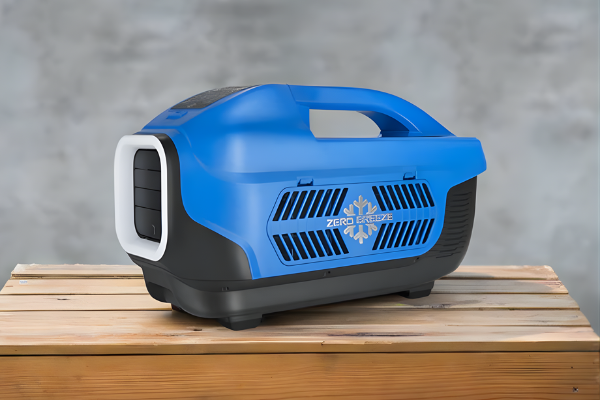
Zero Breeze AC
First-of-its-kind portable air conditioner. Pioneered a new category in personal cooling.
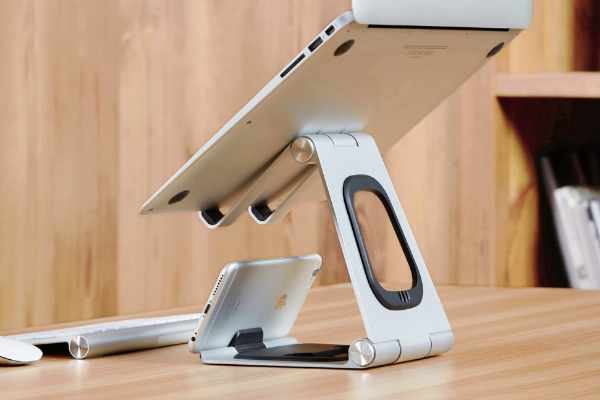
Apex Stand
One of the first portable laptop stands, specifically targeting the growing MacBook market.
Other Launches: HydraTech Vest (fitness), Eastwood Belts (fashion), Drama Mayhem (games), Ridge Stand (tech accessories), SYKO Mount (fitness). View full portfolio →
Beyond Product Engineering
While my products prove I can execute on manufacturing and distribution, the design work behind them demonstrates a different skill set entirely—one that translates directly to building successful digital products. I've designed every visual element of my product launches, from packaging systems to crowdfunding campaign assets.
Crowdfunding Campaign Design
Raised $2M+ across multiple campaigns by designing compelling visual narratives. Created all campaign graphics, product photography direction, video storyboards, and marketing assets. These campaigns required understanding user psychology, conversion design, and storytelling—skills that directly apply to landing pages and SaaS marketing.
Campaign Graphics
Hero images, feature callouts, comparison charts
Copywriting
Product narratives, value propositions, CTAs
Videography
Product videos, campaign storytelling, editing
Why this matters for micro-SaaS: Building a successful software product isn't just about code—it's about designing an interface people want to use, creating a brand that stands out, writing copy that converts, and telling a story that resonates. These are skills I've honed over 13+ years of launching products, and they're directly transferable to building and marketing digital products.
Not Going It Alone
While I operate as a solo founder, I have a bench of experienced developers who've agreed to mentor and support me through this transition. They're friends who believe in this path and will help me navigate technical challenges.
Ian Borders
Managing GP, Darkstar VC | Founder, Kybernesis
15+ years building fintech and payments infrastructure. Founded MergePay (business financial tools), CoinSparrow (Ethereum-based marketplace), and Kybernesis—an AI-powered second brain for agents with MCP integration. Managing General Partner at Darkstar VC, an early-stage fund focused on SaaS tech companies. Startup mentor for Founders Institute, Startup Weekend, and AngelHack. Chiang Mai-based.
Nick Frith
Full-Stack Engineer | Co-founder, Chiang Mai AI Meetups
Full-stack engineer with deep experience in enterprise software development. Co-founder of the Chiang Mai AI Engineers meetup community and official Claude Community partner—organizing weekly events for developers building with AI tools. Hands-on technical advisor bringing corporate-grade engineering discipline to rapid product development.
Frequently Asked Questions
The Window is Open
AI tools have collapsed the barrier between "idea person" and "builder." What used to require a technical co-founder can now be done by a product-minded founder with the right tools and methodology. The micro-SaaS market is maturing but not saturated — there's still enormous opportunity for well-designed, focused tools that solve real problems.
I've spent 13 years learning to ship. Now I have the tools to ship faster than ever. This is the moment to go all-in.
TL;DR
Who: A founder who's raised $2M+ in crowdfunding, sold 500K+ physical products globally, and been trained in design since high school.
What: Transitioning to micro-SaaS using the same product methodology that built successful physical product businesses.
The Ask: $30K loan at 10% annual interest, repaid over 18 months starting Month 7. Optional equity conversion for upside participation.
The Plan: Ship 10+ products in 6 months, build in public, double down on winners. Target: $500+ MRR by Month 6.
Your Protection: Guaranteed repayment regardless of product success. Fallback to marketable design consulting skills.
Your Upside: Private backer portal, monthly updates, optional equity conversion into any product that takes off.
Let's Talk
If you're interested in supporting an innovative founder with a track record
and a clear plan, I'd welcome a conversation.